
Table of Contents
Last updated: October 24, 2026
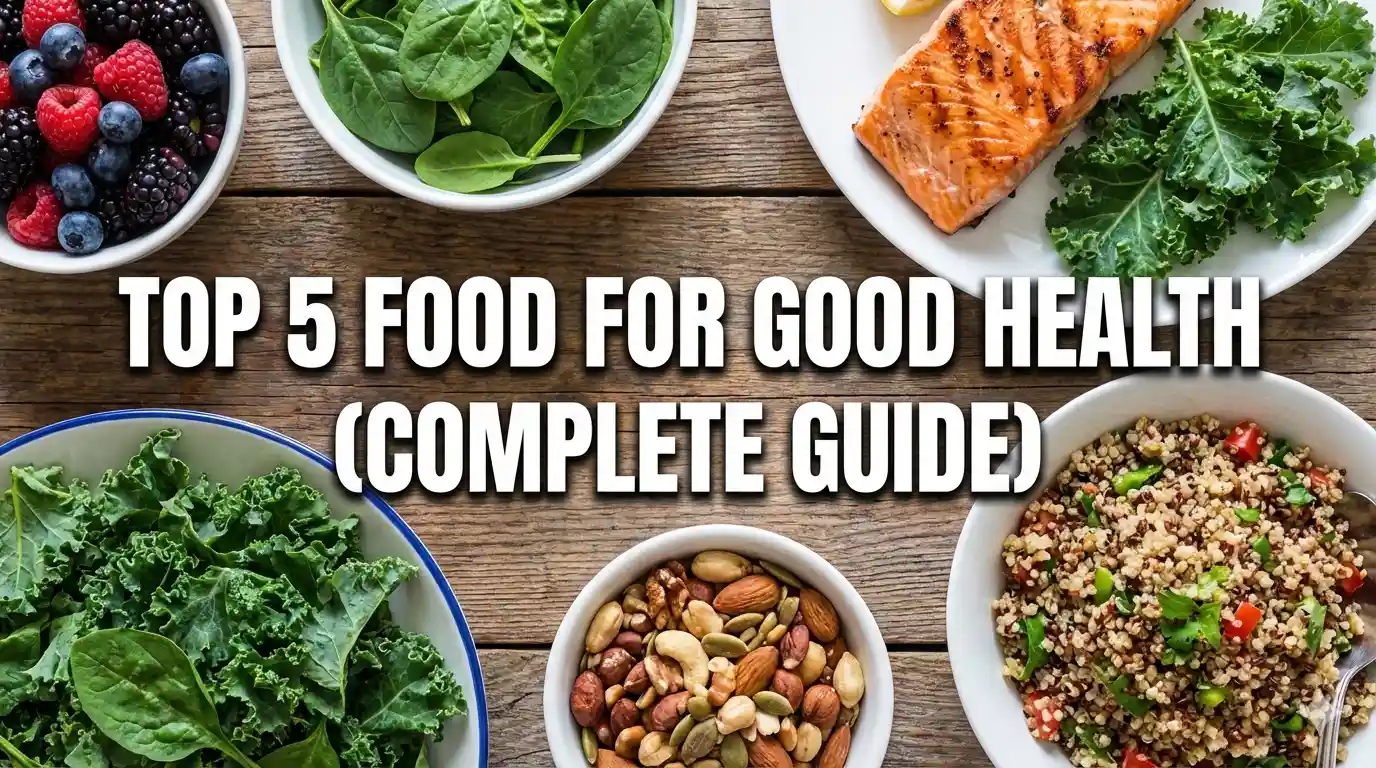
If you’re looking for the top 5 foods for good health, nutrition research points to these: leafy greens and other vegetables, berries and whole fruit, beans and lentils, fatty fish, and whole grains. Together they supply fiber, protein, healthy fats, vitamins, and minerals that most Americans don’t get enough of. They also fit the federal government’s newest advice: the Dietary Guidelines for Americans, 2025–2030, released in January 2026, urge Americans to eat “real food,” with protein at every meal, plenty of fruits, vegetables, and fiber-rich whole grains, and far fewer highly processed foods. Here’s why each food made the list and easy ways to eat more of it.
This article is general information, not medical advice. If you have a health condition, food allergy, or take medications, talk with your doctor or a registered dietitian before changing your diet.
What the 2026 Dietary Guidelines say
The new guidelines are the federal government’s official nutrition advice and shape school meals and other federal food programs. According to an HHS fact sheet, they:
- Prioritize high-quality protein at every meal, from both animal sources (eggs, poultry, seafood, meat) and plants (beans, lentils, nuts, seeds, soy)
- Call for avoiding highly processed packaged foods and sugar-sweetened drinks
- State that no amount of added sugar is recommended as part of a healthy diet
- Encourage getting fats from whole foods such as seafood, nuts, olives, avocados, and dairy, and cooking with options like olive oil
- Urge Americans to prioritize fiber-rich whole grains over refined carbohydrates
Some health groups have raised questions about parts of the guidelines, especially around saturated fat. The American Heart Association still recommends limiting saturated fat. The five foods below are recommended across nearly every major guideline.
1. Leafy greens and colorful vegetables
Spinach, kale, romaine, collard greens, broccoli, carrots, and bell peppers are low in calories and packed with nutrients.
- Key nutrients: vitamins A, C, and K, folate, potassium, and fiber
- Why they matter: diets rich in vegetables are linked to a lower risk of heart disease and some chronic diseases, and the fiber supports digestion.
- Easy wins: add a handful of spinach to eggs or smoothies, keep frozen vegetables on hand, and aim to fill half your plate with vegetables and fruit, as in Harvard’s Healthy Eating Plate.
Note: if you take the blood thinner warfarin, keep your vitamin K intake (found in leafy greens) consistent, and talk to your doctor.
2. Berries and whole fruit
Blueberries, strawberries, raspberries, apples, oranges, and bananas offer natural sweetness with fiber, vitamin C, and antioxidants called polyphenols.
- Why whole fruit beats juice: the fiber slows sugar absorption and keeps you fuller.
- Budget tip: frozen berries are as nutritious as fresh and often cheaper. The guidelines explicitly include fresh, frozen, dried, and canned produce.
- Easy wins: berries on oatmeal or yogurt, an apple with peanut butter as a snack, fruit instead of dessert.
3. Beans, lentils, and other legumes
Black beans, chickpeas, lentils, kidney beans, and split peas are among the most nutritious and affordable foods.
- Key nutrients: plant protein, fiber (often 12–16 grams per cooked cup, according to the Mayo Clinic), iron, folate, potassium, and magnesium
- Why they matter: fiber helps lower LDL cholesterol and steady blood sugar, and most Americans fall short on fiber.
- Easy wins: add chickpeas to salads, make a big pot of chili or lentil soup, try hummus with vegetables. Rinse canned beans to cut sodium.
4. Fatty fish
Salmon, sardines, trout, mackerel, and canned light tuna provide high-quality protein and omega-3 fatty acids (EPA and DHA).
- Why they matter: omega-3s support heart and brain health, according to the NIH Office of Dietary Supplements.
- How much: the FDA’s advice about eating fish suggests adults eat at least 8 ounces of seafood a week, choosing lower-mercury options. Pregnant and breastfeeding women should follow the FDA’s specific guidance.
- Easy wins: sheet-pan salmon, canned salmon or sardines on whole-grain crackers, tuna salad with Greek yogurt.
5. Whole grains
Oats, brown rice, quinoa, barley, whole-wheat bread, and popcorn keep the bran and germ that refined grains lose.
- Key nutrients: fiber, B vitamins, iron, and magnesium
- Why they matter: whole grains are linked to better heart health and steadier energy, and the new guidelines specifically call for replacing refined carbs like white bread and packaged breakfast foods.
- How to spot them: look for “whole” as the first word in the ingredient list, such as “whole wheat” or “whole oats.” Terms like “multigrain” or “wheat flour” don’t guarantee whole grains.
Honorable mentions
- Eggs: affordable, versatile protein with choline
- Plain yogurt and kefir: protein, calcium, and, in many products, live cultures
- Nuts and seeds: healthy fats, protein, and fiber. A small handful is a serving.
- Extra-virgin olive oil: the base of the well-studied Mediterranean diet
Putting it together: a simple day
- Breakfast: oatmeal with berries, walnuts, and a side of eggs or Greek yogurt
- Lunch: spinach salad with chickpeas, vegetables, olive oil, and lemon
- Snack: an apple and a small handful of almonds
- Dinner: baked salmon, roasted broccoli, and quinoa
What to cut back on
The biggest improvements often come from what you eat less of: sugary drinks, candy, pastries, chips, processed meats, and other highly processed foods. Reading labels for added sugar and sodium is one of the simplest habits you can build.
FAQ
What is the single healthiest food?
No single food can cover all your needs. Variety matters most. If you’re starting somewhere, adding more vegetables and beans gives most people a big nutritional boost.
Are frozen and canned foods healthy?
Yes. Frozen fruits and vegetables are picked and frozen at peak ripeness. Canned beans and fish are nutritious, too. Choose low-sodium options without added sugar.
How many servings of fruits and vegetables should I eat?
Most adults need about 1.5 to 2 cups of fruit and 2 to 3 cups of vegetables a day, depending on age, sex, and activity level, according to MyPlate.
Do I need supplements if I eat these foods?
Most healthy adults can meet their needs through food. Some people, such as pregnant women, older adults, or those with deficiencies, may need supplements. Ask your doctor.
