
Table of Contents
By Sam | Updated November 10, 2026. An explainer on the real-world flood risk behind the finale of Matt Reeves’ The Batman, with the latest on the sequel’s release date and official U.S. sea level data.
Matt Reeves’ The Batman (2022) is often called the grittiest live-action Batman film: a rain-soaked detective story starring Robert Pattinson. Its most memorable disaster is not a supervillain’s gadget but something far more ordinary: the Riddler’s bombs breach Gotham’s seawall and floodwater pours into the city. That scene lands because it reflects a real and growing risk for coastal cities. Here is what the film gets right, what official data say about rising seas, and when the story continues.
Key takeaways
- The Batman’s finale shows Gotham flooding after its seawall is destroyed, a plot point that mirrors real coastal flood risk.
- NOAA projects sea level along the U.S. coastline will rise 10 to 12 inches over the next 30 years.
- Flooding is expected to happen more than 10 times as often in 30 years as it does today, NOAA says.
- The Batman Part II is now set for February 18, 2028, after Warner Bros moved it from October 1, 2027.
The disaster in the film
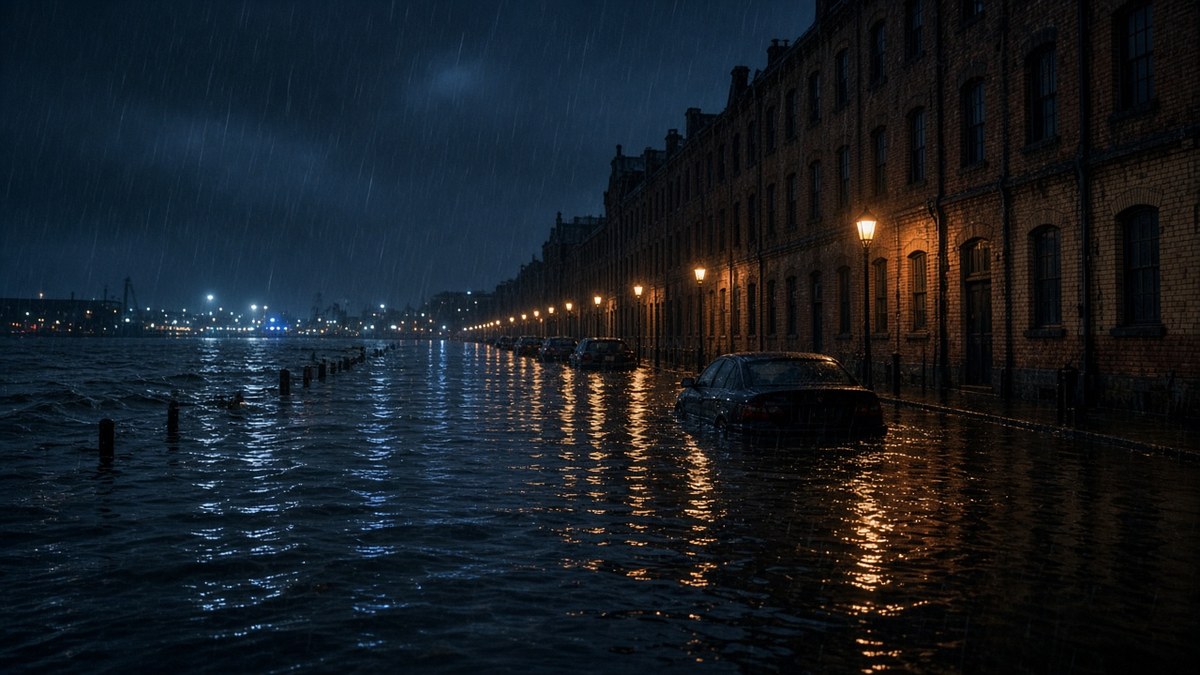
In the film’s final act, the Riddler’s plan culminates in explosions along Gotham’s seawall, which sends water rushing into low-lying parts of the city. Rather than a cosmic threat, the danger is infrastructure failure, with emergency shelters overwhelmed and residents trapped. Batman ends the film helping survivors through the floodwaters. It is fiction, but the vulnerability it shows, a dense coastal city relying on barriers to hold back the sea, is very real.
The real looming disaster: rising seas
The U.S. government’s multi-agency 2022 Sea Level Rise Technical Report, led by NOAA, gives the most up-to-date scenarios for every U.S. state and territory.
| NOAA projection | Figure |
|---|---|
| U.S. coastal sea level rise, next 30 years | 10–12 inches |
| Flooding frequency in 30 years | More than 10 times as often as today, on average |
| Extra rise by 2100 if emissions are not curbed | An additional 1.5–5 feet (0.5–1.5 m) |
The UN’s climate science panel, the IPCC, has also warned that continued sea level rise will encroach on coastal settlements and infrastructure. It found that seawalls can reduce impacts in the short term but can create “lock-ins” and increase long-term exposure unless they are part of a long-term adaptive plan, which is exactly the kind of single point of failure The Batman dramatizes.
The IPCC estimates that, because of population growth in low-lying cities, about a billion people could be at risk from coastal-specific climate hazards by mid-century. It also projects that the number of people exposed to a 100-year coastal flood rises by about 20% if global mean sea level climbs 0.15 metres above 2020 levels, doubles at 0.75 metres and triples at 1.4 metres, without population change or more adaptation.
Why seawalls are not enough
- Barriers can fail during extreme storm surges, especially if poorly maintained.
- They can encourage risky building behind them, raising the stakes if they are overtopped.
- Water comes from many directions: storm surge, heavy rain and rising groundwater.
- Better plans combine options, including wetlands, elevated buildings, drainage upgrades and, in some places, planned relocation, according to the IPCC.
What you can do if you live near the coast
- Check your address on FEMA’s flood maps and your local emergency plan.
- Ask about flood insurance; standard homeowners policies typically do not cover flood damage.
- Keep a go-bag and know your evacuation route.
- Sign up for local emergency alerts.
If you are house hunting, flood risk is one reason not to skip due diligence; see our guide to why waiving inspections is risky. For the bigger climate picture, read why net zero by 2050 needs less consumption and why our food system is not ready for the climate crisis.
When is The Batman Part II coming out?
According to Deadline, Warner Bros moved The Batman Part II from October 1, 2027 to February 18, 2028, the Presidents Day holiday weekend, after J.J. Abrams’ The Great Beyond took the October 2027 date. Deadline reported the sequel’s production start was delayed five months, and the new date gives Reeves more time in post-production. It will still have IMAX screens.
Robert Pattinson, Andy Serkis and Colin Farrell return as Batman, Alfred and the Penguin. New cast members include Scarlett Johansson, Sebastian Stan, Jayme Lawson, Charles Dance, Gil Perez-Abraham and Sebastian Koch.
Where to watch The Batman
The Batman first streamed on HBO Max in 2022 after its theatrical run. Streaming libraries change often, so check HBO Max or a streaming guide for current availability in your country. For more viewing ideas, see our list of must-watch Netflix films for 2026.
FAQ
What disaster happens at the end of The Batman?
The Riddler’s bombs destroy Gotham’s seawall, flooding parts of the city.
Is that kind of flooding realistic?
Coastal flooding is a real and growing risk; NOAA expects U.S. flooding to occur more than 10 times as often within 30 years.
When does The Batman Part II release?
February 18, 2028, according to Warner Bros’ July 2026 schedule change.
How much will U.S. sea levels rise?
NOAA projects 10 to 12 inches along the U.S. coast over the next 30 years.
Sources: NOAA 2022 Sea Level Rise Technical Report; IPCC AR6 WGII SPM; Deadline (July 15, 2026).