
Table of Contents
The stock market sell-off that rattled Wall Street this week pushed both the S&P 500 and the Dow Jones Industrial Average into correction territory on Friday, Nov. 20, 2026. The S&P 500 fell 8.61% for the week, the Dow lost 8.02% and the Nasdaq-100 dropped 10.43%, its worst week since 2020. A collapse in AI and chip stocks drove the slide, and Anthropic’s record IPO and strong Nvidia earnings were not enough to stop it. Here is what happened, why it happened and what it means for your money.
Key takeaways
- Correction confirmed: The S&P 500 is now more than 10% below its Oct. 6 all-time high, its first correction since March 2025, according to AP.
- Brutal week: S&P 500 down 8.61%, Dow down 8.02%, Nasdaq-100 down 10.43% and Russell 2000 down 7.48%, per Schwab Network.
- Chips crushed: The Philadelphia Semiconductor Index fell 17.1%, its worst week since September 2001, wiping out about $2.3 trillion in value.
- AI trade under pressure: Nvidia fell nearly 23% for the week, AMD more than 20%, and Anthropic closed Friday at $88.91, just above its $83 IPO price.
- Fear is high: Wall Street’s fear gauge hit levels not seen since April 2025, and Bitcoin slid to about $59,000.
How bad was the stock market sell-off?
Friday was the worst day of a rough week. The S&P 500 dropped 3.7% to close at 6,910.39, the Dow fell 2% to 48,147.33 and the Nasdaq-100 lost 5.6% to 25,028.98, Yahoo Finance reported. It was the S&P 500’s seventh straight losing session, its longest losing streak since 2020.
AP said the decline gave the S&P 500 its worst weekly loss in more than 18 months and knocked the Nasdaq composite into negative territory for the year. A “correction” is the term professional investors use when an index falls more than 10% from its recent high. The last time the S&P 500 was in one was March 2025, during the trade war.
Small companies did not escape either. The Russell 2000, which tracks small-cap stocks, lost 7.48% for the week.
The week by the numbers
| Index | Weekly change (week ended Nov. 20) |
|---|---|
| S&P 500 | -8.61% |
| Dow Jones Industrial Average | -8.02% |
| Nasdaq-100 | -10.43% |
| Russell 2000 | -7.48% |
| PHLX Semiconductor Index (SOX) | -17.13% |
Source: Schwab Network weekly review, Nov. 21, 2026.
Why chip stocks led the crash
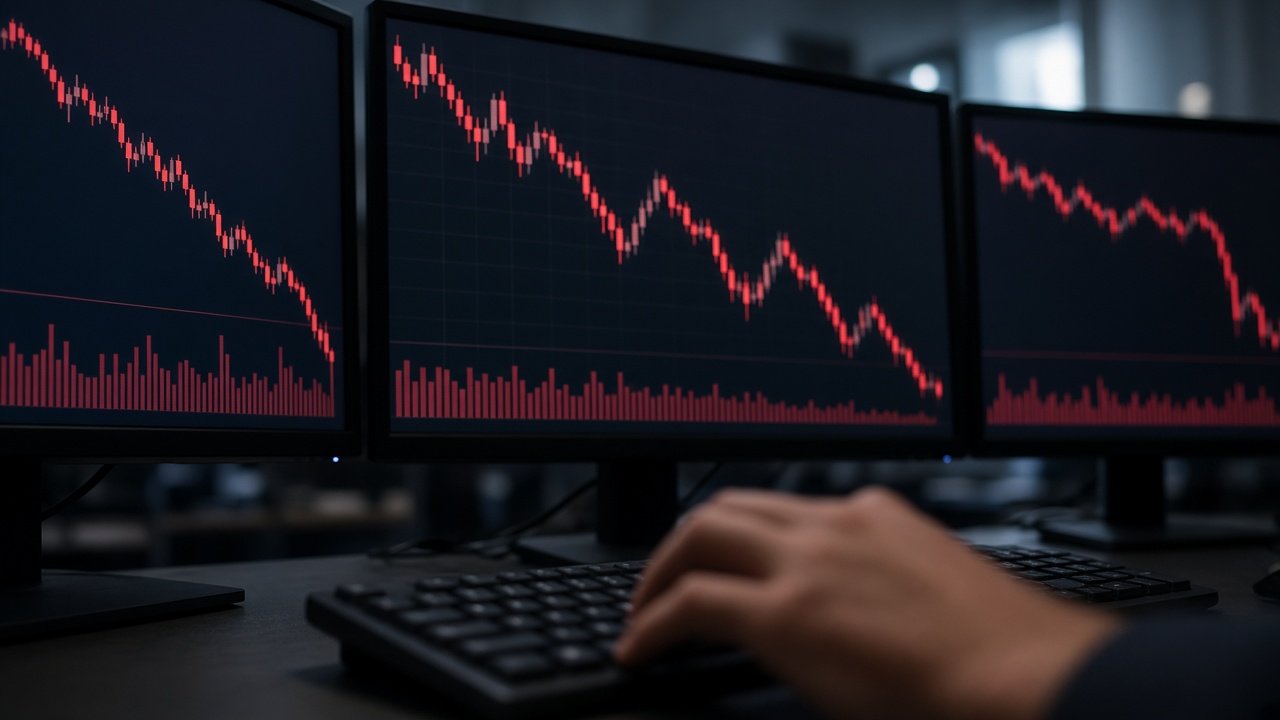
Semiconductors were at the center of the storm. The PHLX Semiconductor Index plunged 10.7% on Friday alone, erasing about $1.3 trillion in market value in a single session, MarketWatch reported, citing Dow Jones Market Data. Its 17.1% weekly drop was the worst since the week of Sept. 21, 2001, and about $2.3 trillion in value disappeared over five days.
All 30 stocks in the index fell at least 5% on Friday. Astera Labs, Credo Technology and Arm were among the biggest losers, each down between 14% and 16%.
“Over-exuberance, speculation, greed, complacency” defined the first half of 2026, Ted Mortonson, a managing director at Baird, told MarketWatch. Since November began, he said, the mood has turned to “fear” and “panic.”
Nvidia and AMD under pressure
Nvidia reported strong earnings this week, but its shares still fell nearly 23% for the week. Investors are weighing the company’s search for a successor to former CEO Jensen Huang, a congressional summons over its chip export policy and a reported SEC investigation into its accounting practices. The drop cut Nvidia’s market value to $3.03 trillion, putting it below Alphabet for the first time in two years.
AMD fell 13% on Friday and more than 20% for the week after Hunterbrook Media, whose affiliated fund disclosed a short position in the stock, alleged links between AMD and blacklisted Chinese firms. AMD said the claims “misrepresent AMD’s business practices and relationships.” If you followed our coverage of AMD’s record data center quarter, this is a sharp reversal.
New limits on China’s access to advanced AI chips and proposed export bills in Congress added to the pressure. Raymond James analyst Ed Mills wrote that this is “likely the beginning of a more restrictive phase in technology export controls and AI-model access vis-à-vis China.”
Did the Anthropic IPO make things worse?
Many investors hoped Anthropic’s debut would lift the AI trade. Instead, it became part of the story. The Claude maker raised $81.3 billion in the largest U.S. IPO on record, plus another $26 billion in private placements, according to Schwab Network. You can read how the deal was set up in our Anthropic IPO explainer.
But the stock fell 8.5% on its second day of trading to close at $88.91, only a few dollars above its $83 offer price. “Investors will be nervous that we are seeing the long-feared AI bubble-burst moment unfolding,” Samuel Kerr, head of global ECM at Mergermarket, told MarketWatch.
“The stock market is going through an AI repricing, reflecting an environment of slowing data center buildouts, reduced funding sources for AI-related projects and a slower trajectory of technology-related earnings growth,” Richard Saperstein of Treasury Partners told Bloomberg, as quoted by Yahoo Finance.
Fear spread beyond stocks
The selling spilled into other assets. Wall Street’s fear gauge jumped to levels last seen in April 2025. Bitcoin hovered near $59,000, down nearly 5% on Friday and on track for its seventh straight weekly loss, the longest streak since April 2022. Strategy, the largest corporate holder of Bitcoin, sank 30.3% for the week, the worst performer in the Nasdaq-100.
Some bears cashed in. Investor Michael Burry, of “The Big Short” fame, locked in profits on half of his bearish bets against Nvidia and a semiconductor ETF on Friday, Yahoo Finance reported.

What the stock market sell-off means for you
A correction is painful, but it is not the same as a crash or a recession. Here are practical steps that most financial planners suggest during sharp drops. This is general information, not personal investment advice.
- Avoid panic selling. Selling after a big drop locks in losses. Check whether your long-term goals have actually changed.
- Check your concentration. If a big share of your 401(k) or brokerage account sits in a handful of AI or chip stocks, this week showed how fast that can swing.
- Keep cash for near-term needs. Money you need in the next year or two generally should not be in stocks.
- Rebalance on a schedule. If stocks have fallen below your target mix, rebalancing can bring your portfolio back in line without guessing the bottom.
- Watch the Fed. Interest rates still matter. See our recap of the latest Fed minutes ahead of the Dec. 8–9 meeting.
What to watch next week
Investors will be watching whether chip stocks find a floor, how Anthropic trades after its rocky start, and any new moves on chip export rules in Washington. A report that CrowdStrike is in talks to buy Zscaler, which sent Zscaler up as much as 20% after hours on Friday, shows deal activity has not stopped. Thanksgiving week also brings shorter trading hours, which can make price moves sharper.
FAQ
Is the stock market in a correction?
Yes. As of Friday, Nov. 20, 2026, both the S&P 500 and the Dow are in correction territory, meaning they are more than 10% below their recent highs. The S&P 500 peaked on Oct. 6.
Why did stocks fall this week?
Fears that AI spending and valuations are unsustainable, a record 17% drop in chip stocks, new China chip restrictions, scrutiny of Nvidia and AMD, and a weak second day for Anthropic shares all fed the sell-off.
How much did Nvidia fall?
Nvidia shares fell nearly 23% for the week, cutting its market value to about $3.03 trillion and putting it below Alphabet for the first time in two years.
Should I sell my stocks now?
That depends on your goals and timeline. Many advisers caution against panic selling during corrections. Consider talking with a licensed financial adviser before making big changes.
How did Anthropic stock do after its IPO?
Anthropic priced its IPO at $83 per share. On Friday, its second day of trading, the stock fell 8.5% to close at $88.91.
This article is for information only and is not financial advice. Market figures are as of the close on Friday, Nov. 20, 2026.
