
Table of Contents
Introduction: When a CEO’s Memo Went Global
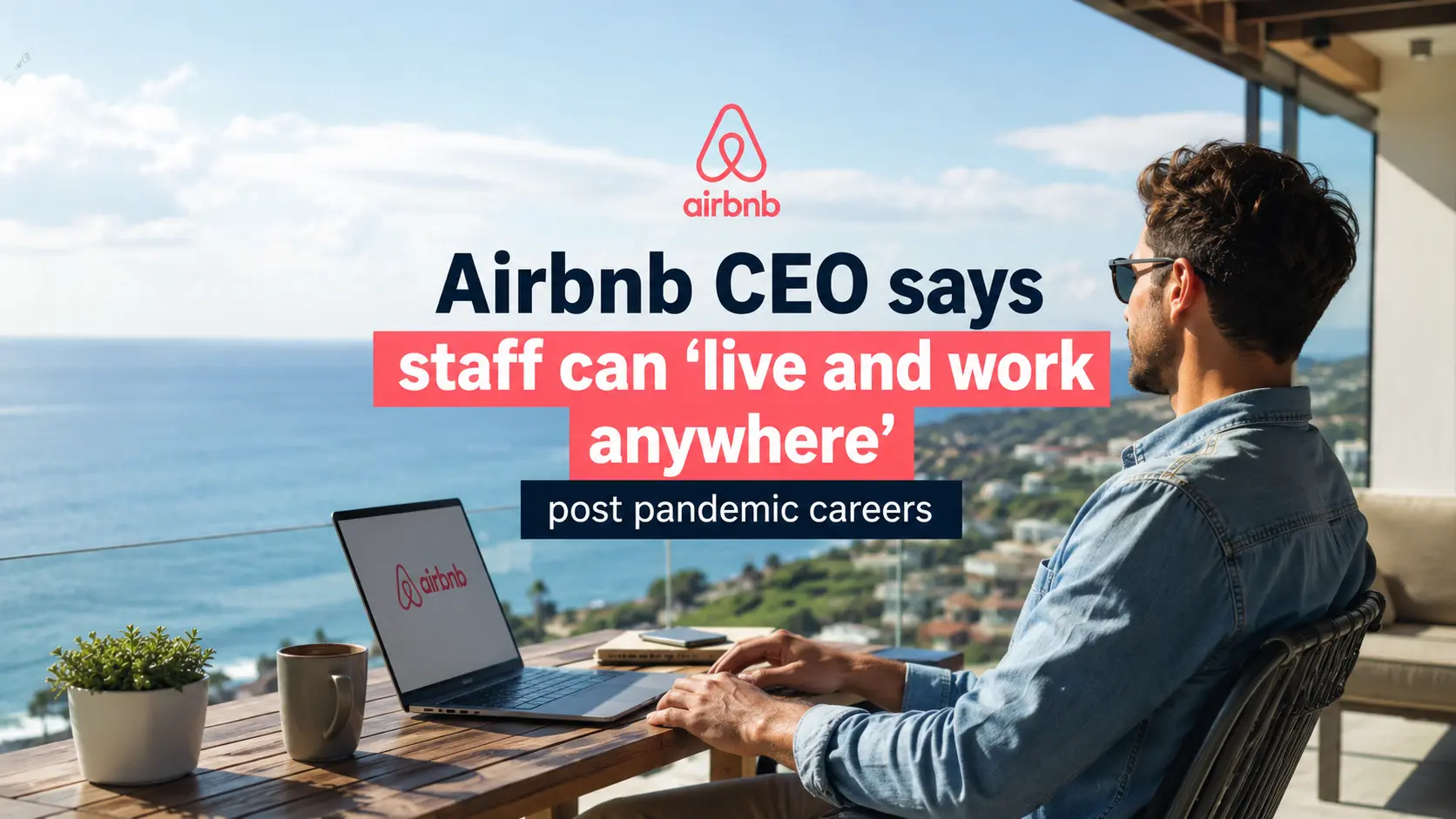
In May 2022, Brian Chesky, co-founder and CEO of Airbnb, sent a company-wide email that rippled far beyond Silicon Valley. In it, he told his roughly 6,000 employees something that millions of workers worldwide had quietly been hoping to hear from their own bosses: they could live and work from anywhere — permanently.
“I’ve been thinking about this a lot lately,” Chesky wrote. “The world has become more flexible. I think we should be too.” With those words, Airbnb didn’t just update its HR policy. It planted a flag at the frontier of a profound cultural shift — one that the COVID-19 pandemic had set in motion two years earlier, and that shows no signs of reversing.
The announcement attracted global attention not simply because Airbnb is a Fortune 500 company, but because of what it symbolized. Here was the CEO of a platform built on the idea of belonging anywhere in the world, putting that very philosophy to work for his own employees. The message was clear: location independence is no longer a perk for a privileged few. It is rapidly becoming a defining feature of the modern career.
This article explores how Airbnb’s remote work policy reflects — and accelerates — one of the most sweeping transformations in the history of work.
Background: Airbnb, COVID-19, and the Office That Disappeared
Airbnb’s Business Model and Its Natural Fit for Remote Work
Founded in 2008, Airbnb built its empire on a deceptively simple premise: people with spare rooms could host travelers looking for an alternative to sterile hotel stays. Over time, it grew into a global marketplace connecting over 4 million hosts with guests in more than 220 countries and regions. Its entire brand DNA is woven around the idea of being at home anywhere in the world.
When Chesky announced that employees could work from any location, he was, in a sense, applying the company’s core product philosophy to its own workforce. If Airbnb convinced the world that you could feel at home in a stranger’s apartment in Tokyo or a treehouse in Costa Rica, why couldn’t it convince its own people that they could do their best work from wherever they chose to live?
How COVID-19 Dismantled the Traditional Office
Before March 2020, remote work was a fringe benefit — something tech startups occasionally offered to attract talent, but rarely the default mode of operation for major corporations. Then the pandemic hit, and almost overnight, an estimated 70 percent of the U.S. workforce found itself working from home, according to data from Stanford University economist Nicholas Bloom.
The global experiment was jarring at first. Kitchen tables became makeshift desks. Parents juggled Zoom calls and homeschooling. But as weeks stretched into months, something unexpected happened: productivity held. A Stanford study found that remote workers were, on average, 13 percent more productive than their in-office counterparts. Microsoft’s 2021 Work Trend Index, surveying over 30,000 workers across 31 countries, found that 73 percent of employees wanted flexible remote work options to remain in place post-pandemic.
The office, as it had been known for over a century, had suddenly become optional.
The Evolution of Remote and Hybrid Work
What emerged from the pandemic wasn’t a binary choice between fully remote and fully in-office — it was a spectrum. Companies began experimenting with hybrid models, requiring employees to come in two or three days a week. Others, like Twitter (before its 2022 ownership change), Shopify, and Spotify, went fully remote. Some, like Apple and Amazon, pushed for a return to office — and faced significant employee backlash in response.
By 2023 and into 2024, the “return-to-office” debate had become one of the most contentious issues in corporate America. But amid the noise, a clear signal emerged: employees who had tasted location independence were not giving it up without a fight.
The “Live and Work Anywhere” Philosophy: What Chesky Really Meant
Unpacking Airbnb’s Remote Work Policy
Airbnb’s policy goes further than most hybrid work arrangements. Employees can live and work anywhere in the country where they are employed. They can also work internationally — in over 170 countries — for up to 90 days per year without any impact on their compensation. There are no location-based pay adjustments either; an Airbnb engineer in Montana earns the same as one in San Francisco.
The policy has four key components: the freedom to work from home or the office; the ability to move anywhere within one’s home country without a pay cut; short-term international work flexibility; and quarterly in-person gatherings to maintain team cohesion and culture.
How It Differs from Traditional Office Culture
Traditional office culture is built around three pillars: presence (you are expected to be seen), proximity (your career often advances based on visibility to leadership), and uniformity (everyone operates on the same schedule in the same place). Airbnb’s policy dismantles all three.
In its place, the company substitutes outcomes over optics, trust over surveillance, and intentional connection over passive co-location. Chesky was explicit about this trade-off, noting that productivity hadn’t declined after the company went remote and that some of its best work — including a landmark redesign of its platform — was completed with teams scattered across the globe.
Why Airbnb Adopted the Approach
The rationale was both philosophical and strategic. Philosophically, Chesky recognized that the pandemic had irrevocably changed what employees valued. Strategically, he understood that talent retention and recruitment in a competitive market required more than salary. Flexibility, as surveys consistently show, has become one of the top factors candidates consider when evaluating job offers — often ranking above compensation itself for knowledge workers.
There was also a business insight embedded in the policy. Airbnb’s platform benefits when people travel for longer periods. If its own employees become long-term travelers and remote workers, they become living advertisements for the product. Chesky estimated that Airbnb bookings by employees surged after the policy was implemented.
How the Pandemic Rewrote Career Priorities
Work-Life Balance: From Buzzword to Baseline
Before 2020, “work-life balance” was the kind of phrase that appeared in company brochures but rarely in lived experience. The pandemic stripped away the commute, the office politics, and the arbitrary 9-to-5 structure, and in doing so, gave millions of people a glimpse of a different way to organize their time.
A 2023 Gallup survey found that employees who work remotely report significantly higher well-being scores than their in-office counterparts, particularly around stress, burnout, and sense of autonomy. Workers began asking a question that few had dared raise before: Why should my physical location determine when and how I work?
Location Independence: The New Career Currency
For a generation of professionals who grew up believing that career advancement required living in expensive gateway cities — New York, London, San Francisco, Mumbai — the pandemic offered a revelation. You could do the same job, earn the same salary, and live somewhere far more affordable, spacious, or simply more aligned with your personal values.
This realization triggered a major demographic shift. Data from the U.S. Census Bureau showed that cities like San Francisco and New York experienced net population loss during and after the pandemic, while mid-sized cities and rural areas saw growth. The pattern repeated across Europe, Australia, and parts of Asia.
Flexibility, Autonomy, and Employee Well-Being
Autonomy — the ability to decide when, where, and how you work — has emerged as one of the strongest predictors of employee satisfaction and retention. When remote workers are trusted to manage their own time, they tend to reward that trust with higher engagement and loyalty.
This shift carries enormous implications for digital collaboration. Tools like Slack, Notion, Zoom, Asana, and Figma didn’t just enable remote work — they redefined what it means to work together. Asynchronous communication became not a workaround but a feature, allowing distributed teams to collaborate across time zones without the tyranny of back-to-back meetings.
The Rise of the Digital Nomad Lifestyle
Benefits and Challenges of Location-Independent Work
The digital nomad lifestyle — working remotely while traveling continuously or living in multiple locations throughout the year — was once the preserve of freelancers and travel bloggers. The pandemic mainstreamed it. By 2023, an estimated 35 million people globally identified as digital nomads, up from roughly 7 million in 2019, according to MBO Partners research.
The benefits are significant: cultural enrichment, reduced cost of living in lower-cost countries, freedom from the monotony of a fixed environment, and the ability to structure work around life rather than the reverse.
The challenges are equally real: time zone misalignment, unreliable internet in some destinations, visa and tax complications, social isolation, and the psychological difficulty of maintaining stable routines without a fixed base.
Popular Destinations and the Visa Revolution
Countries that recognized the economic opportunity in attracting remote workers moved quickly to introduce digital nomad visas. Portugal’s D8 visa, launched in 2022, became one of the most sought-after. Barbados, Croatia, Bali, Estonia, Costa Rica, and the UAE all introduced similar programs. Cities like Lisbon, Chiang Mai, Medellín, and Tbilisi became hubs for location-independent professionals, building entire ecosystems of co-working spaces, networking events, and nomad-friendly infrastructure.
Growing Global Corporate Acceptance
Major corporations beyond Airbnb have embraced location flexibility to varying degrees. Spotify introduced its “Work From Anywhere” model in 2021, allowing employees to choose their preferred work mode. GitLab, an entirely remote company since its founding, has long demonstrated that distributed teams can outperform co-located ones at scale. Automattic, which makes WordPress, employs over 1,000 people across 77 countries — and has no headquarters whatsoever.
Why Employees Are Choosing Flexibility Over Traditional Office Jobs
The shift is not subtle, and the data is unambiguous. A 2023 McKinsey survey found that 87 percent of employees, when offered the opportunity to work flexibly, took it. More telling still: 29 percent of workers in the same survey said they would consider leaving their jobs if required to return to the office full-time.
The reasons are deeply practical. Remote work eliminates commutes, which for urban workers average over an hour daily — time that can be redirected to family, health, or personal development. It reduces costs: fewer business wardrobes, fewer lunches out, less money spent on coffee and transit. For parents, caregivers, and people managing chronic health conditions, the flexibility can be transformative.
There is also a generational dimension. Millennials and Gen Z workers, who now represent the majority of the global workforce, consistently rank workplace flexibility as a top employment criterion. For many, a job that requires five days per week in an office is not a desirable opportunity — it is a red flag.
Companies that fail to offer flexibility are discovering this at significant cost. The Society for Human Resource Management estimates that replacing an employee costs between 50 and 200 percent of their annual salary, depending on seniority. In a labor market where remote job opportunities are abundant, inflexible employers are losing their best people to those who adapt.
How Companies Are Adapting to the Future of Work
Progressive employers are reshaping their organizations around a new operating model — one defined not by where work happens, but by how effectively it gets done.
Microsoft has invested billions in its Teams platform and reimagined its campus not as a mandatory daily destination but as a hub for collaboration and culture-building. Salesforce introduced “Flex Team Agreements,” allowing individual teams to decide their own rhythms of in-person and remote work. Dropbox declared itself a “Virtual First” company, converting its offices from workspaces into community hubs.
HR leaders are rethinking performance management, moving away from hours-logged metrics toward output-based assessment frameworks. Onboarding, mentorship, and culture transmission — once handled organically through office proximity — are being deliberately engineered through virtual programming, peer networks, and structured in-person retreats.
Technology investment is accelerating. Companies are deploying AI-powered productivity tools to help distributed teams manage workflows, reduce meeting overhead, and maintain alignment. Platforms like Notion AI, Microsoft Copilot, and various specialized tools are transforming how remote workers plan, write, code, and communicate.
Comparing Work Models: Remote, Hybrid, and In-Office
| Dimension | Fully Remote | Hybrid | Traditional In-Office |
| Flexibility | Maximum | Moderate | Minimal |
| Talent Pool | Global | Regional/National | Local |
| Overhead Costs | Low | Medium | High |
| Collaboration | Asynchronous-first | Mixed | Synchronous-first |
| Culture Building | Requires intentional effort | Shared effort | Organic proximity |
| Employee Autonomy | High | Moderate | Low |
| Productivity | High (for independent tasks) | Varies | Mixed |
| Cybersecurity Risk | Higher | Medium | Lower |
| Innovation | Strong in async, weaker in spontaneous ideation | Balanced | Strong in brainstorming |
Fully remote work excels at attracting global talent, reducing real estate costs, and enabling deep focus work. Its weaknesses lie in culture cohesion, spontaneous collaboration, and the onboarding of new employees who benefit from proximity to mentors.
Hybrid work attempts to capture the best of both worlds — flexibility for focused work, presence for collaboration and culture. Executed well, it is perhaps the most sustainable model for large organizations. Executed poorly, it creates a two-tier culture where in-office workers benefit from proximity bias while remote workers fall behind.
Traditional in-office work retains advantages in industries where physical presence is genuinely necessary — manufacturing, healthcare, and roles requiring specialized equipment. For knowledge work, however, the case for mandatory full-time office attendance has become increasingly difficult to sustain.
The Real Challenges of Remote Work
Communication Barriers and Collaboration
Remote work is not without its friction. Without the ability to spin your chair around and ask a colleague a quick question, information flow slows. Misunderstandings multiply in text-based communication. Critical context — tone, body language, informal cues — gets lost in Slack threads and email chains.
Building psychological safety in a distributed team requires deliberate effort that many managers, trained in the office paradigm, haven’t yet developed.
Productivity, Isolation, and Culture
While aggregate productivity data tends to favor remote work, the picture is nuanced. Deep, focused work — writing, coding, analysis — often improves at home. Creative collaboration, complex problem-solving that benefits from real-time exchange, and the kind of serendipitous idea generation that happens over coffee are harder to replicate virtually.
Employee isolation is a genuine concern, particularly for workers who live alone or who are early in their careers and rely on the office for professional socialization and mentorship. A 2023 report from Buffer’s State of Remote Work found that loneliness remains the second-biggest challenge remote workers face, cited by 23 percent of respondents.
Cybersecurity Risks of the Remote Workforce
A distributed workforce dramatically expands an organization’s attack surface. Employees working from home networks, coffee shops, and international locations introduce significant cybersecurity vulnerabilities. IBM’s Cost of a Data Breach report has consistently found that remote work environments correlate with higher data breach costs. Organizations must invest in zero-trust architecture, VPNs, endpoint security, and comprehensive employee training to mitigate these risks.
Industries Most Transformed by Remote Work
Technology and software development were the earliest and most enthusiastic adopters of remote work — and remain the most fully transformed. Finance and professional services followed, with many firms discovering that trading desks and advisory meetings can be conducted virtually without significant loss of effectiveness.
Media, marketing, and content creation shifted smoothly to distributed models. Legal services, consulting, and education have all seen significant remote work adoption.
By contrast, healthcare delivery, manufacturing, construction, retail, and hospitality remain predominantly in-person by necessity. The divide between remote-capable and presence-required industries is reshaping economic geography, as knowledge workers leave expensive cities while service workers remain.
Technology as the Engine of Location-Independent Careers
Cloud computing provides the infrastructure that makes location-independent work possible — enabling access to files, applications, and systems from any device, anywhere. Collaboration platforms like Microsoft Teams, Slack, Zoom, and Google Workspace have become the connective tissue of distributed teams.
AI-powered productivity tools are the next frontier. Large language models now assist with drafting, analysis, coding, and research in ways that amplify individual productivity. Project management platforms like Asana, Linear, and Jira make it possible to coordinate complex, multi-team projects asynchronously and at global scale.
Virtual reality and spatial computing — still emerging, but accelerating — promise to further dissolve the boundary between physical and digital collaboration. Products like Apple Vision Pro and Meta Quest are early experiments in creating shared virtual workspaces that approximate the presence and spontaneity of in-person interaction.
Key Insights: Expert Opinions and Workplace Trend Predictions
Nicholas Bloom, the Stanford economist who has studied remote work extensively, predicts that hybrid work will become the dominant model for knowledge workers globally, settling at roughly two to three days per week in the office. “The office is not dead,” he notes, “but it will never be the same.”
Lynda Gratton of London Business School, author of Redesigning Work, argues that the pandemic forced organizations to confront a question they had avoided for decades: what is the purpose of the office? Her answer: not for individual work, which can happen anywhere, but for human connection, creative collision, and the rituals that build organizational culture.
The World Economic Forum’s Future of Jobs Report projects that by 2027, 60 percent of companies will use remote work as their primary talent acquisition strategy. McKinsey’s research suggests that up to 30 percent of work hours globally could be performed remotely by the end of the decade, representing a permanent restructuring of the labor market.
Future Outlook: Long-Term Implications for Employers, Cities, and Real Estate
For Employers and Employees
Employers who embrace workforce flexibility gain access to a global talent pool, reduce real estate costs, and demonstrate the kind of trust-based culture that attracts high-performers. Those who resist face mounting attrition, reduced applicant pools, and a reputational disadvantage in competitive hiring markets.
For employees, location independence translates to genuine optionality — the ability to choose where to live based on personal values, family needs, and financial priorities rather than commute distance.
For Cities and Real Estate Markets
The long-term consequences for urban real estate are still unfolding, but the early signals are significant. Office vacancy rates in major cities like San Francisco, New York, and London have reached multi-decade highs, according to CBRE research. Secondary cities and rural areas are experiencing increased demand for residential real estate as remote workers depart expensive metros.
This shift creates both opportunities and challenges. Cities that can attract remote workers — through quality of life, affordability, and infrastructure — stand to benefit. Those that relied on the daily migration of office workers face a more difficult adjustment.
For Global Talent Acquisition
Perhaps most consequentially, location-independent work is globalizing the labor market. A software engineer in Lagos or Bangalore can now compete directly for jobs headquartered in London or New York. This is creating both opportunity — giving talented individuals in emerging markets access to global wages — and disruption, as domestic labor markets in wealthy countries face new forms of competition.
Lessons Businesses Can Learn from Airbnb’s Remote Work Strategy
Airbnb’s approach offers a blueprint that goes beyond simply telling employees they can work from home. Several principles stand out for any business seeking to build a sustainable, competitive remote-first culture.
Trust is the foundation. Airbnb’s policy begins with a presumption of employee competence and responsibility. Organizations that surveil, micromanage, or performance-manage remote employees by presence rather than outcomes will undermine the very benefits remote work offers.
Intentionality replaces proximity. When you remove the office as the default meeting place, culture does not build itself. Airbnb’s quarterly in-person gatherings are deliberate investments in human connection. Companies must engineer belonging, not assume it.
Consistency builds trust. Airbnb’s decision to maintain location-agnostic pay was a powerful statement that remote work would not be used as a lever to cut compensation. Companies that adjust pay based on where employees choose to live risk signaling that flexibility comes at a hidden cost.
Communication must be redesigned. Async-first communication, clear documentation, and disciplined meeting hygiene are not nice-to-haves in a remote organization — they are the operating system. Investing in these capabilities is as important as any technology investment.
Lead with the product logic. Chesky’s genius was recognizing that Airbnb’s remote policy and Airbnb’s business model told the same story. When your internal culture reflects your external brand, the result is authenticity that resonates with employees, customers, and the public alike.
Conclusion: Is Remote Work a Trend or the Future?
The question of whether remote work is a temporary adjustment or a permanent transformation has been debated with surprising persistence, given how much evidence has accumulated. The answer, by now, seems clear: it is both a trend that has already transformed the present and a structural shift that will define the future.
COVID-19 did not create remote work. It accelerated a trajectory that technology had been enabling for decades, compressing what might have been a generation-long transition into roughly two years. The tools, the mindsets, the management practices, and the legal frameworks needed to sustain distributed work have matured remarkably quickly.
Airbnb’s “live and work anywhere” policy is not merely a generous HR benefit. It is a considered bet on what the future of talent, culture, and competitive advantage looks like. It reflects a recognition that in a world where knowledge work can happen anywhere, the organizations that will attract the best minds are those that offer the most latitude to decide where and how they do their best work.
The pandemic did not just change where we work. It changed what we believe work is for — and who it should serve. In the years ahead, the companies that internalize that lesson will build not just more productive workforces, but more human ones.
